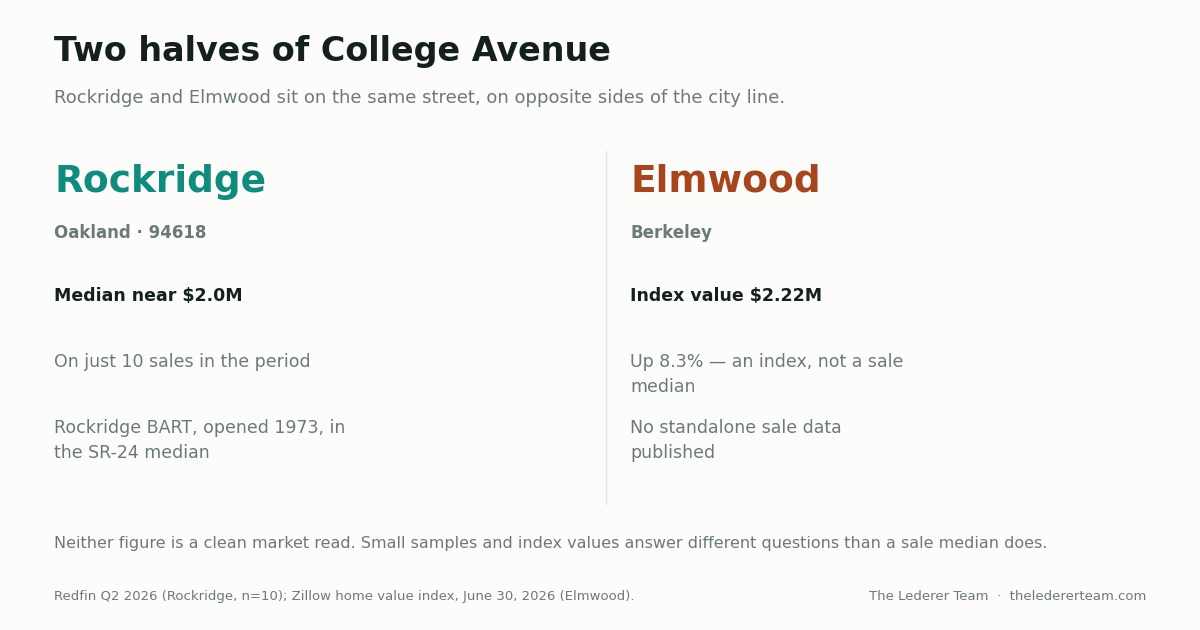
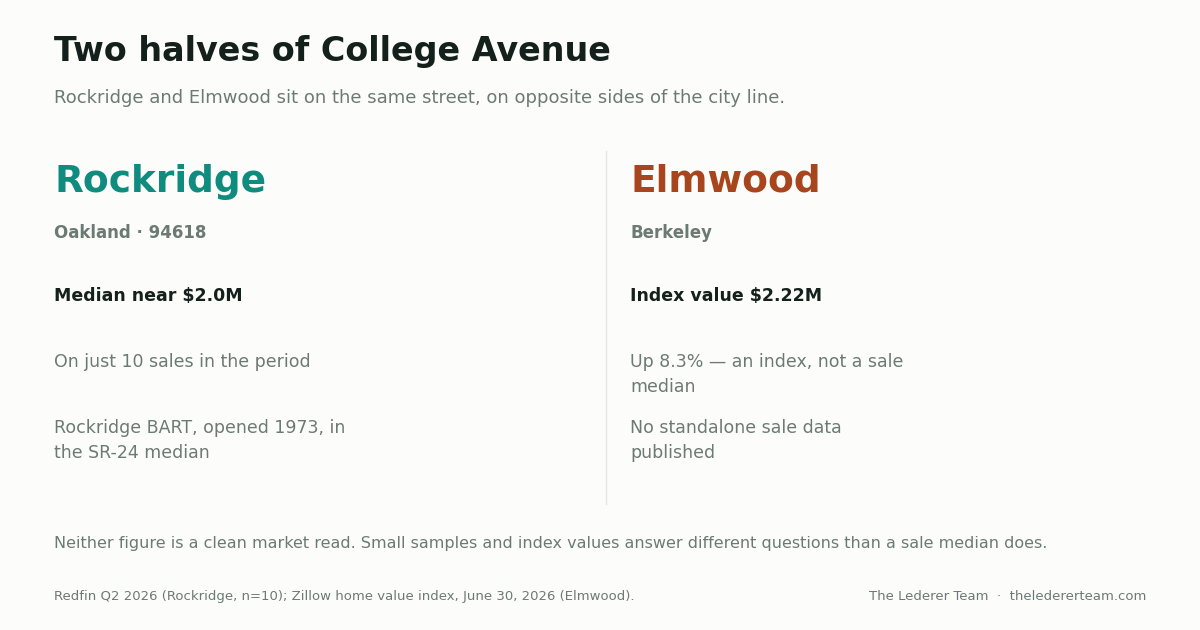
Short answer: They are one commercial street and two different cities. Rockridge is Oakland, Elmwood is Berkeley, and that line decides your transfer tax, your school district and your city services. Zillow's home value index put Elmwood at $2,217,930 as of June 30, 2026, up 8.3% year over year. Rockridge trades below that, on very thin sale volume.
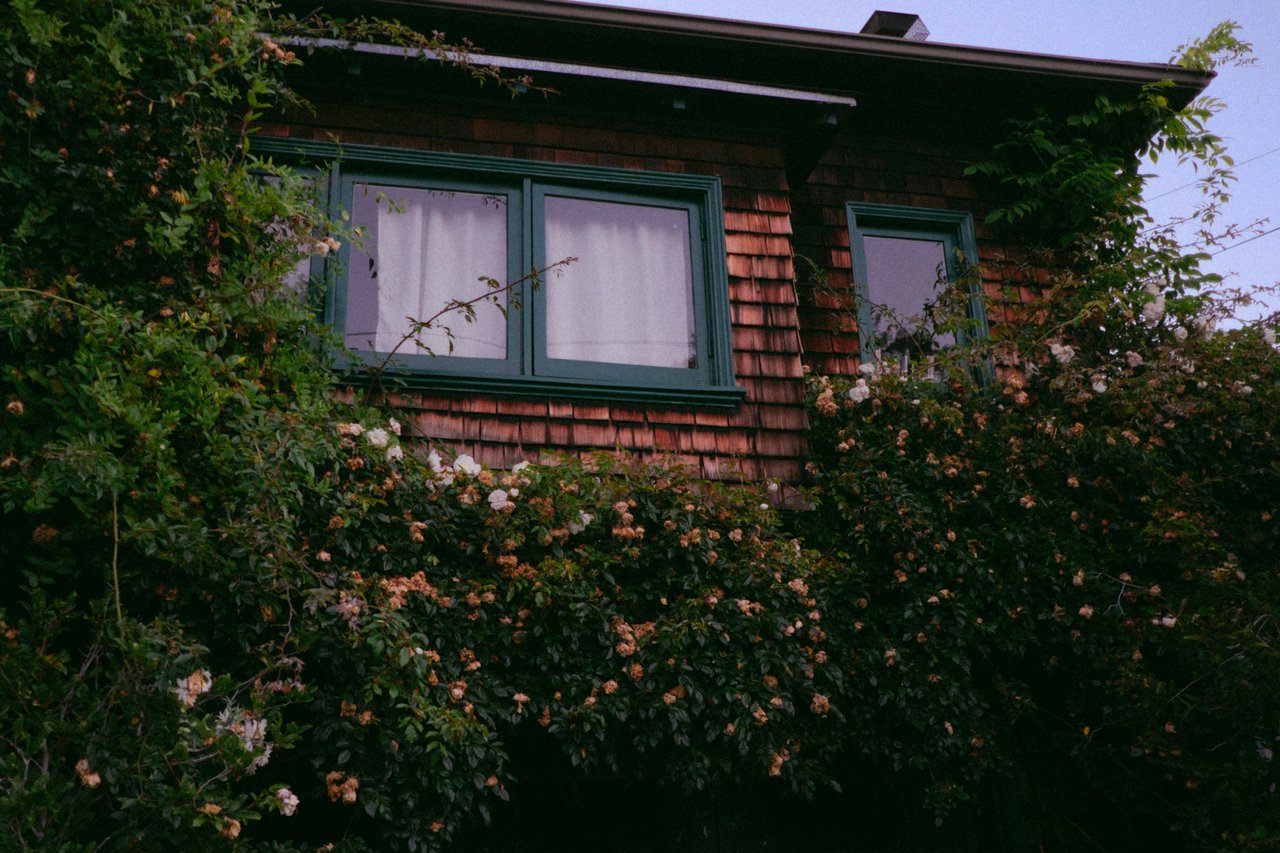
The line down the middle of College Avenue
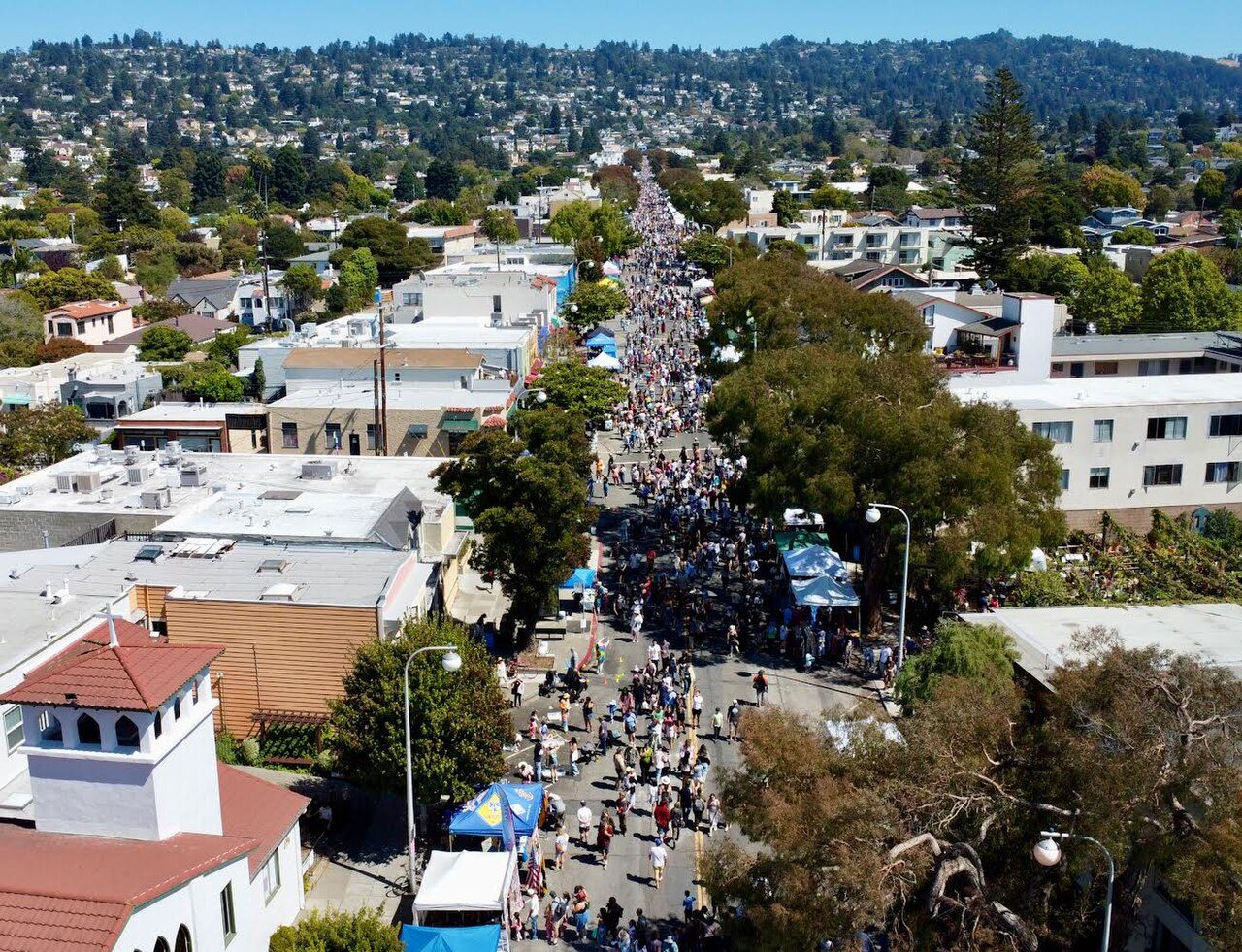
People shop these two neighborhoods as if they were one place, because walking between them takes minutes and the shops blend into each other. Rockridge sits in Oakland, bounded by Telegraph Avenue on the west, the Oakland Hills on the east, the Berkeley city line on the north, and Pleasant Valley, 51st and Broadway on the south. Elmwood sits on the Berkeley side of that northern boundary.
Everything municipal follows from that line: which city taxes your sale, which district your children attend, which agencies respond, and which permit counter you deal with when you remodel.
What the numbers say, and where they stop being reliable
This is the honest part. Neither neighborhood has clean, current sale statistics, and I would rather say so than hand you a precise-looking figure.
For Elmwood, the best available number is Zillow's home value index: $2,217,930 as of June 30, 2026, up 8.3% year over year. Understand what that is. The index covers all homes in an area, not a median of what actually sold. It reads direction and level well. It is not a comp.
For Rockridge, Redfin's most recent cut showed a median near $2.0 million, but on just ten sales. Ten sales cannot support a trend claim in either direction, and the year-over-year change attached to that sample is not a number I will publish. City figures are far more solid.
Measure, 3 months ending June 2026 (Redfin) | Oakland (Rockridge's city) | Berkeley (Elmwood's city) |
|---|---|---|
Median sale price | $898,511 | $1,509,179 |
Year over year | +5.7% | +2.6% |
Median days on market | 20 | 15 |
Share sold above list | 68.5% | 83.1% |
Homes sold | 805 | 228 |
Price per square foot | $537 | $944 |
Compete Score | 83 | 92 |
Read those city medians as context, not as a Rockridge or Elmwood price. Both neighborhoods sit well above their own city's median. What the table tells you reliably is speed and competition: Berkeley clears faster and a larger share of its sales close above list. On Oakland's median, note that Redfin showed it up 5.7% while Zillow's index showed Oakland down 8.8% as of February 2026. Two sources, two directions. Quoting one without the other gives you half the picture.
Transfer tax: the difference nobody prices in
Here is a concrete consequence of that city line. Both neighborhoods pay Alameda County's documentary transfer tax of $1.10 per $1,000. City tax is on top, and the two schedules differ.
City tax band | Oakland (Rockridge) | Berkeley (Elmwood) |
|---|---|---|
Up to $300,000 | $10.00 per $1,000 | $15.00 per $1,000 |
$300,000 to $1.7 million | $15.00 per $1,000 | $15.00 per $1,000 |
$1.7 million to $2 million | $15.00 per $1,000 | $25.00 per $1,000 |
$2 million to $5 million | $17.50 per $1,000 | $25.00 per $1,000 |
Above $5 million | $25.00 per $1,000 | $25.00 per $1,000 |
At Elmwood's price level, that $1.7 million threshold matters. It matters more starting January 1, 2027, when Berkeley's Measure W, approved in November 2024, replaces the current structure with 2.5% at $1.6 million and up, 3.0% at $1.9 million, and 3.5% at $3.0 million. Thresholds are adjusted annually for value and recalculated before the effective date, so confirm the final figures with the City of Berkeley and a title officer. Transfer tax is also customarily negotiable between buyer and seller in Berkeley. The full picture is in seller transfer taxes across the East Bay.
Housing stock, transit and the shape of daily life
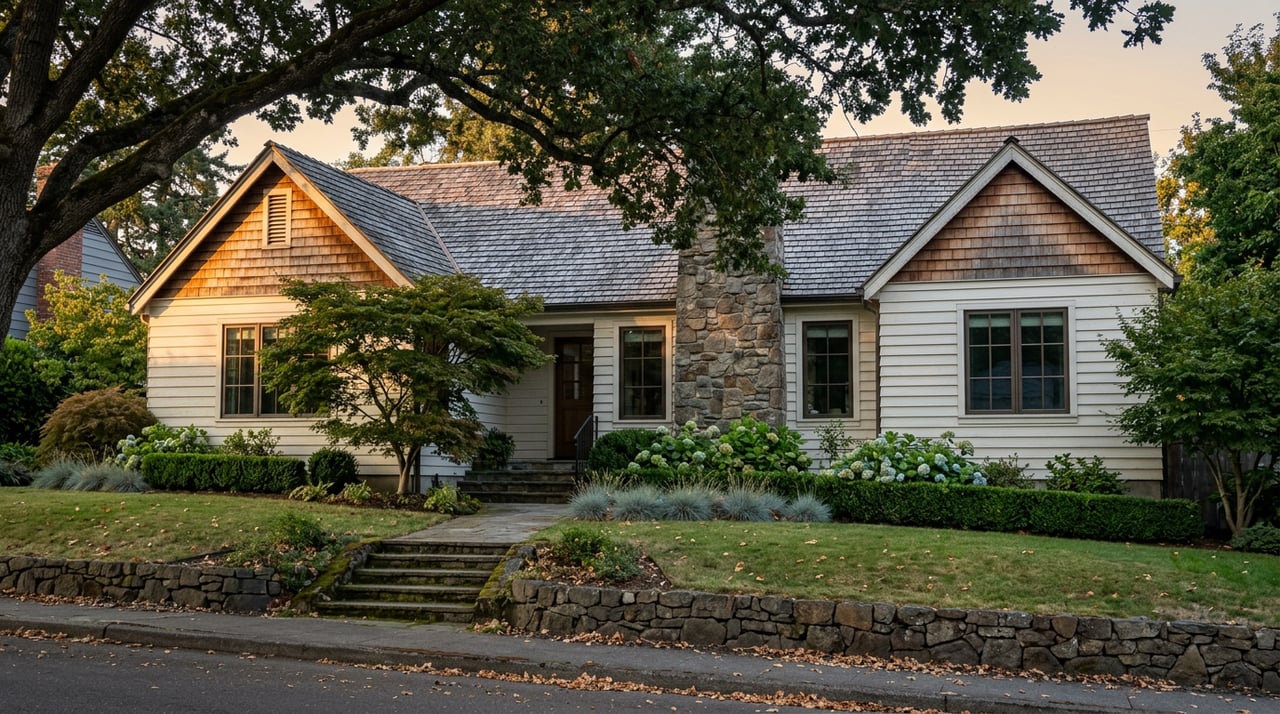
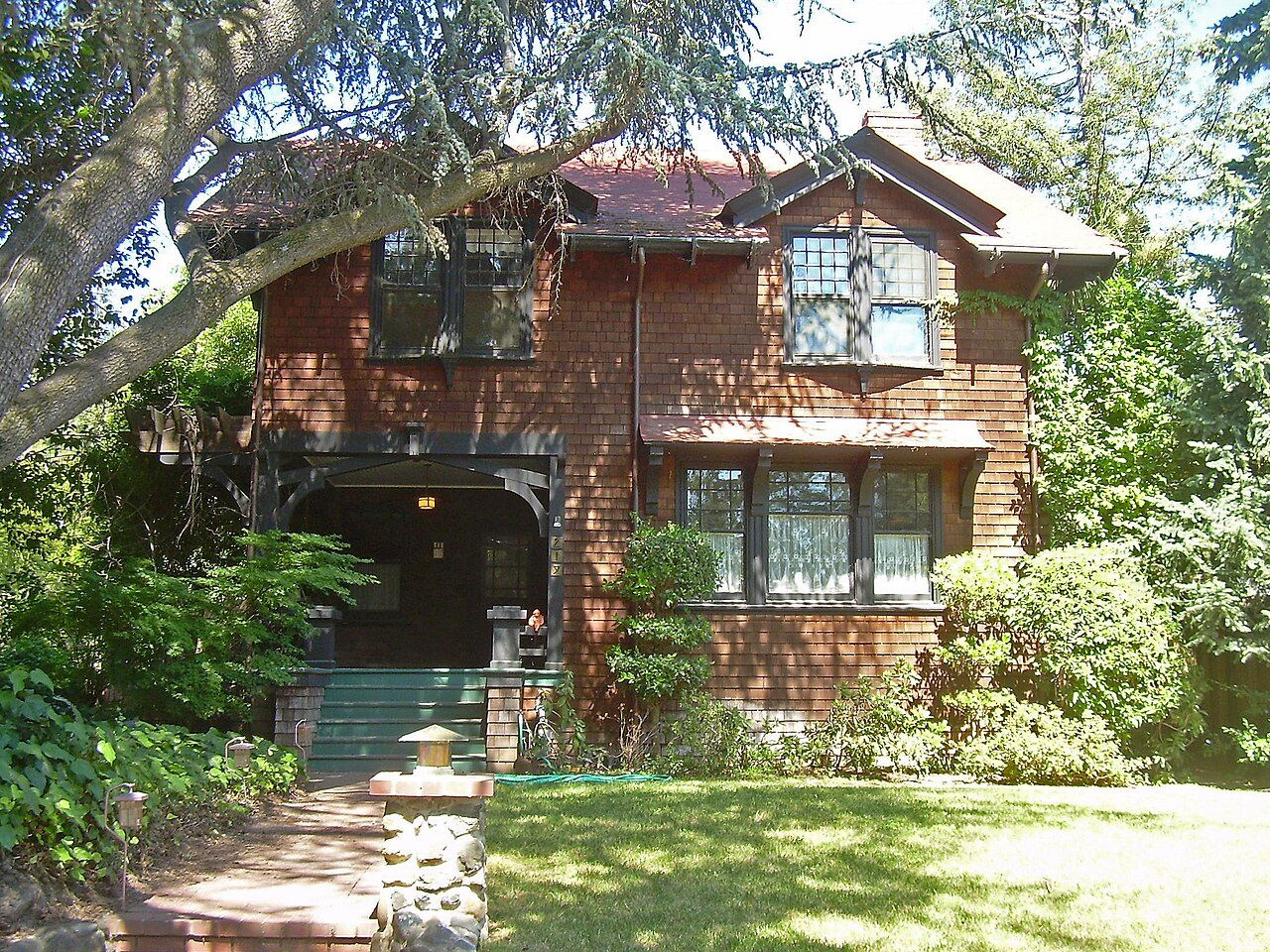
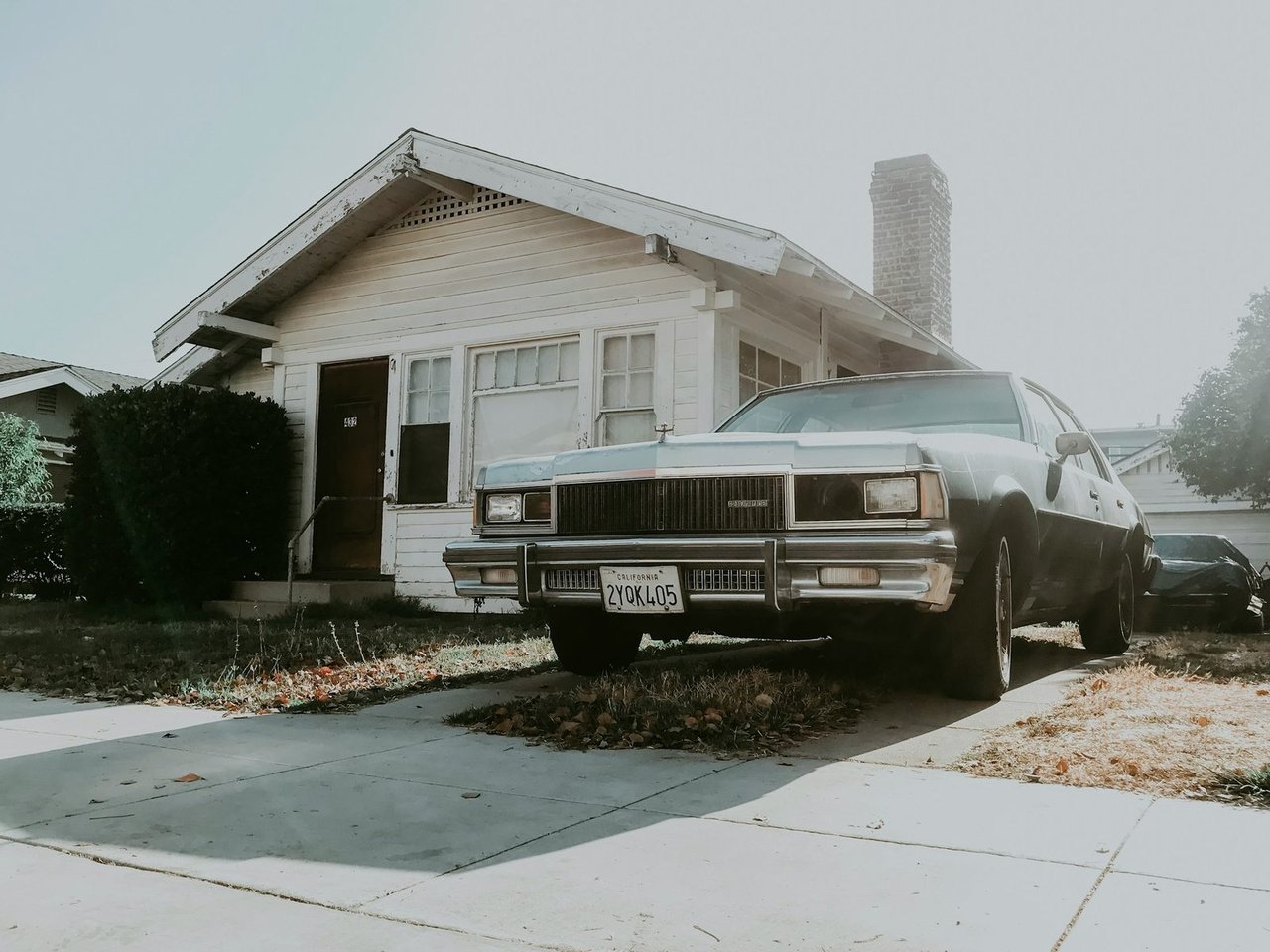
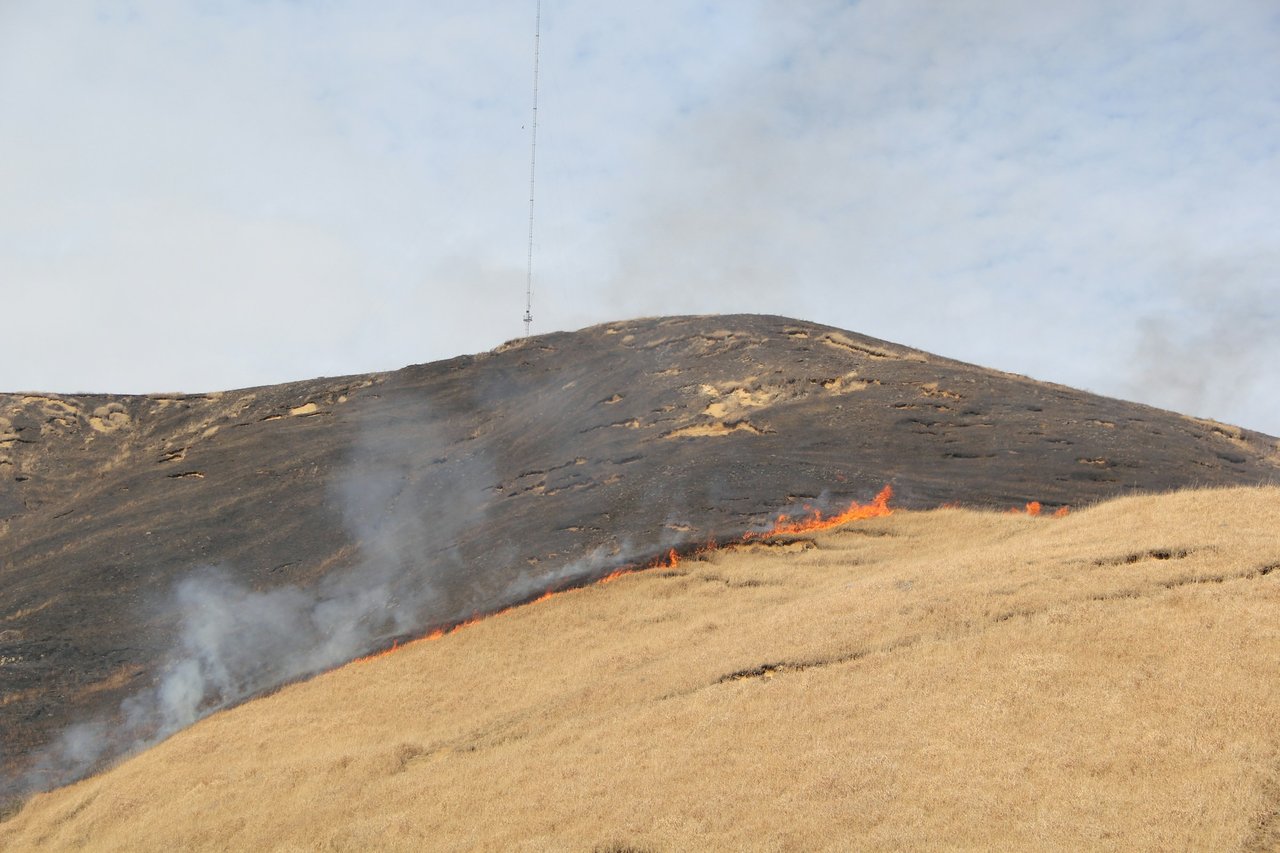
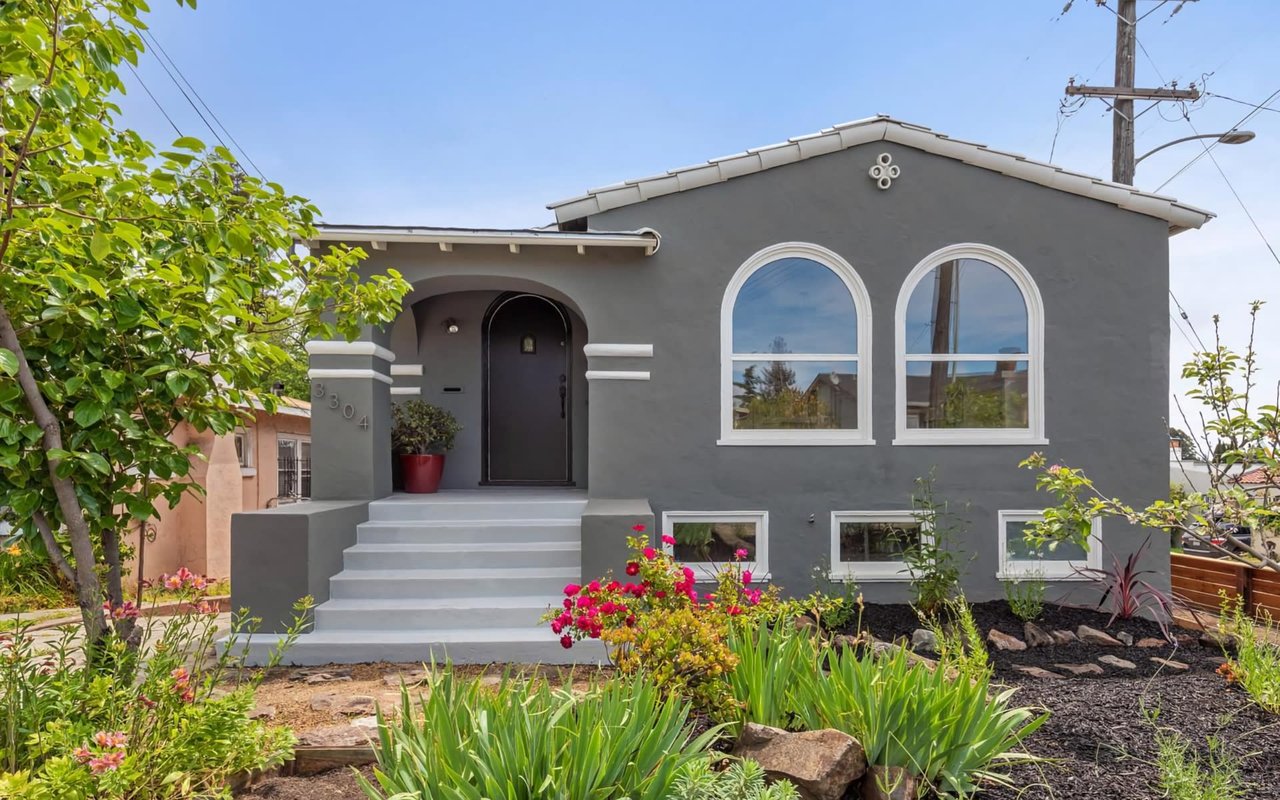
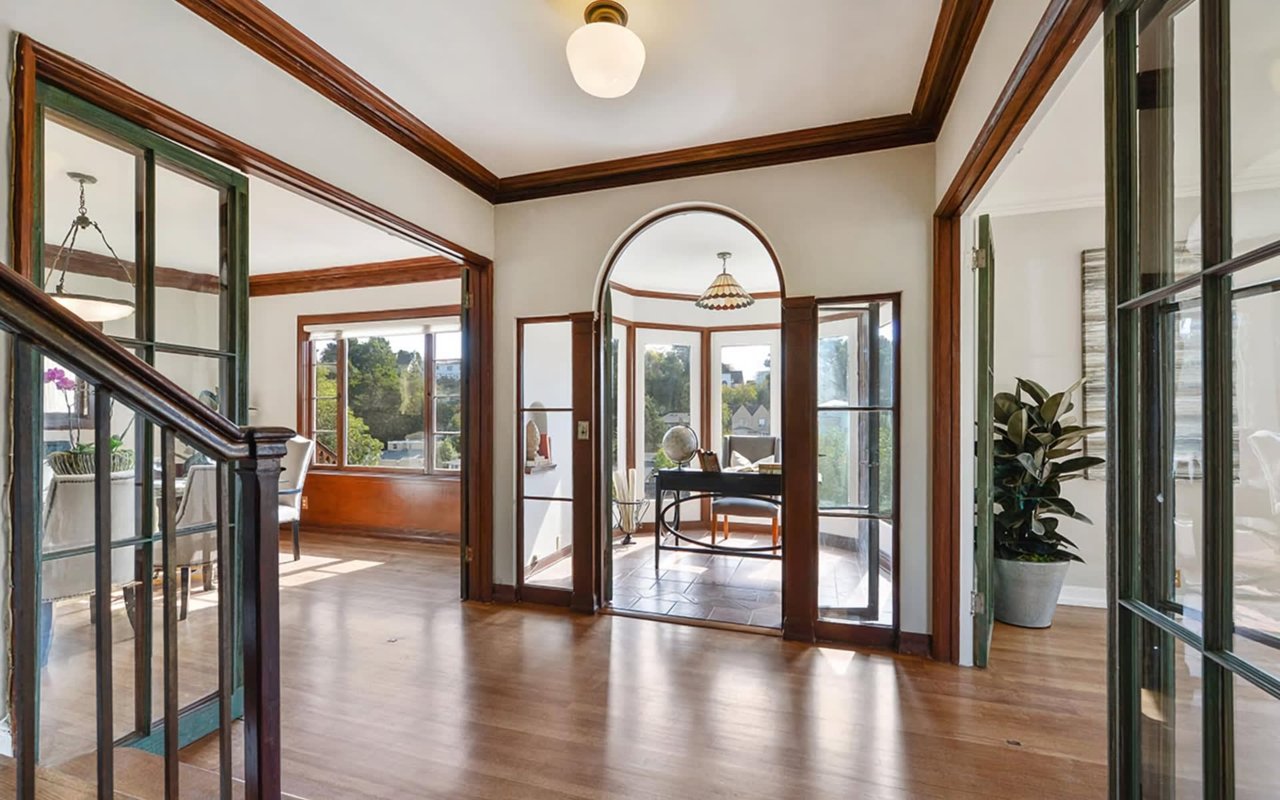
Rockridge's housing was largely built between the 1920s and 1950s, with some stock from 1909 to 1912: bungalows, cottages and multi-family buildings on a tight grid. College Avenue carries more than 80 restaurants, cafes and shops, with Rockridge Market Hall as the food anchor. The district declined after Highway 24 was completed in 1964, then revitalized. Worth knowing: the 1991 Oakland firestorm came within half a mile of College Avenue.
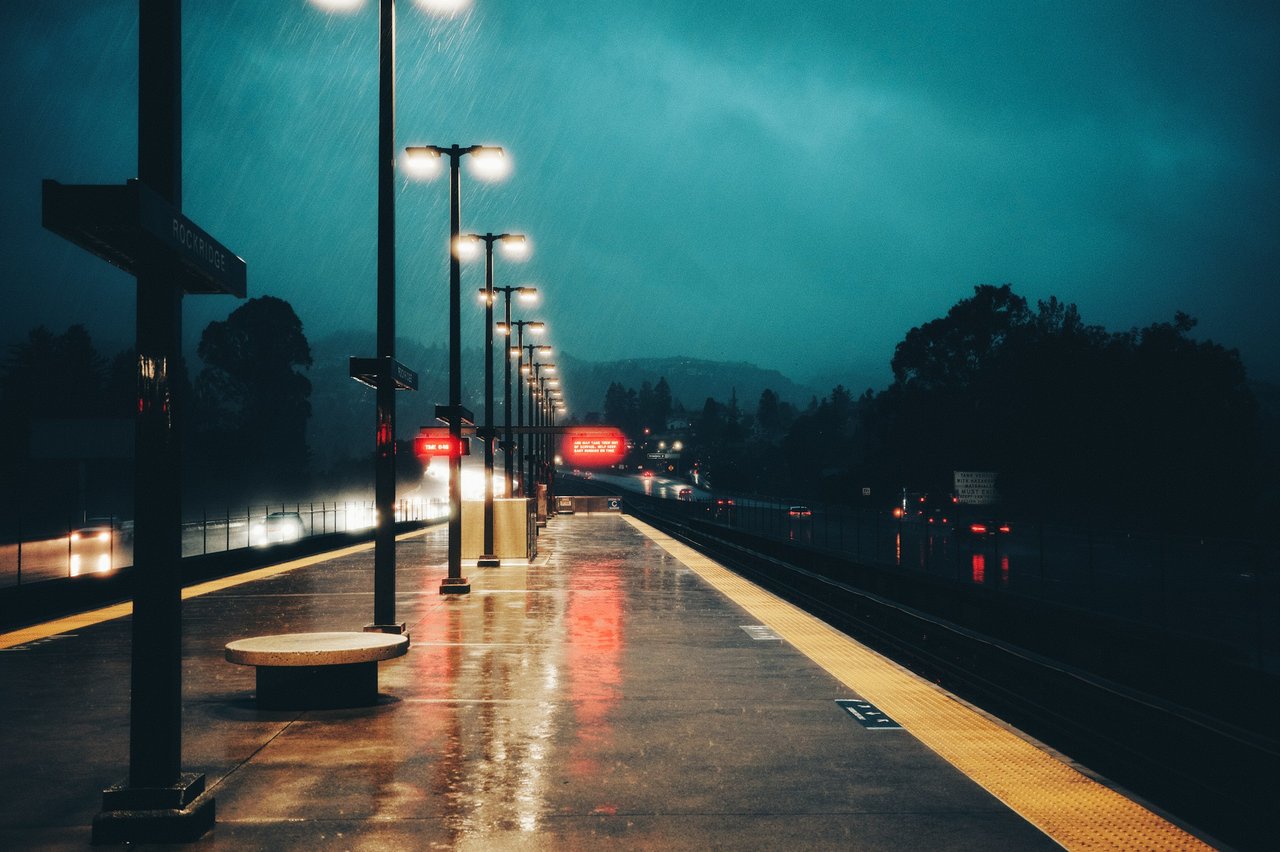
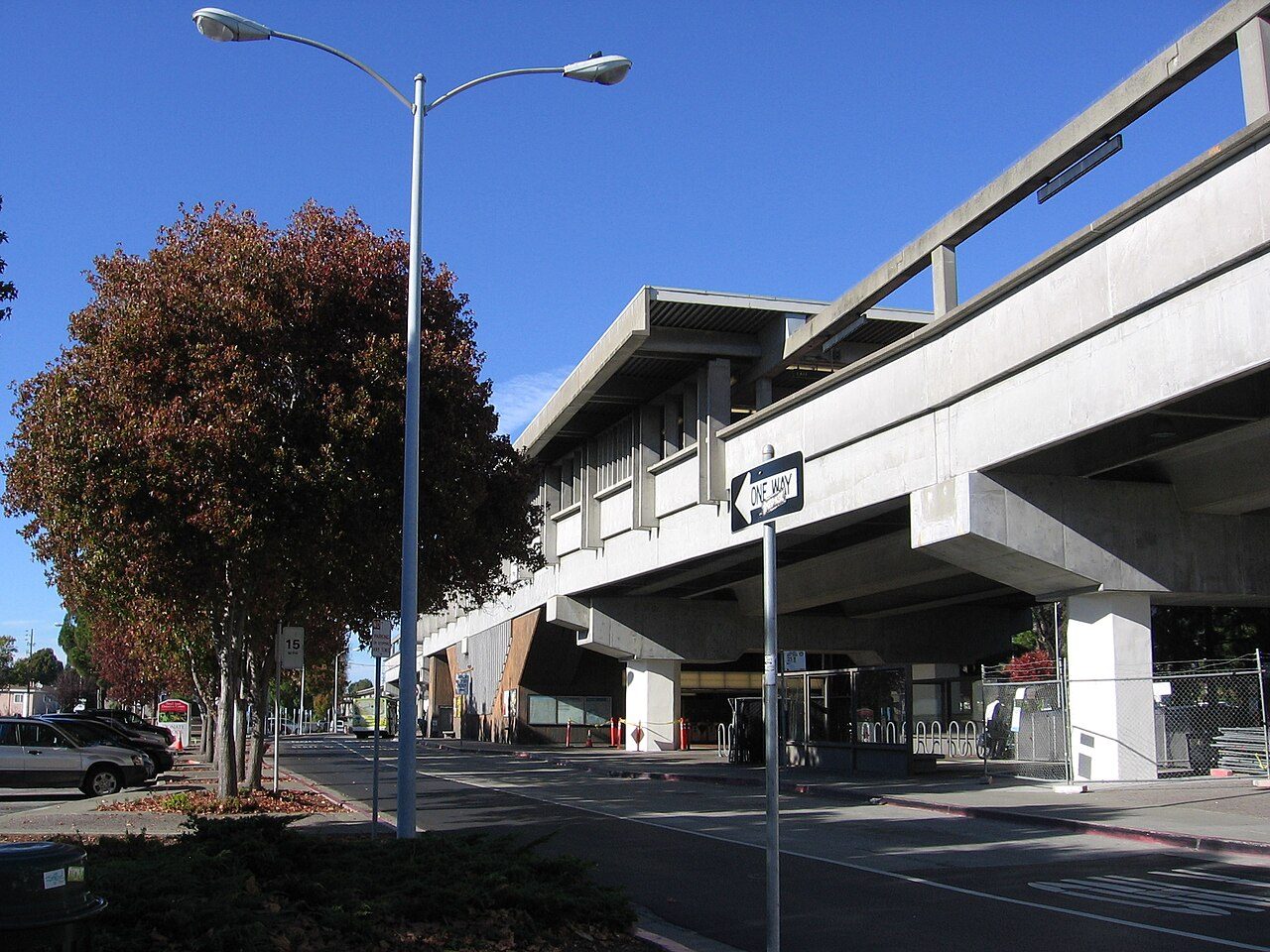
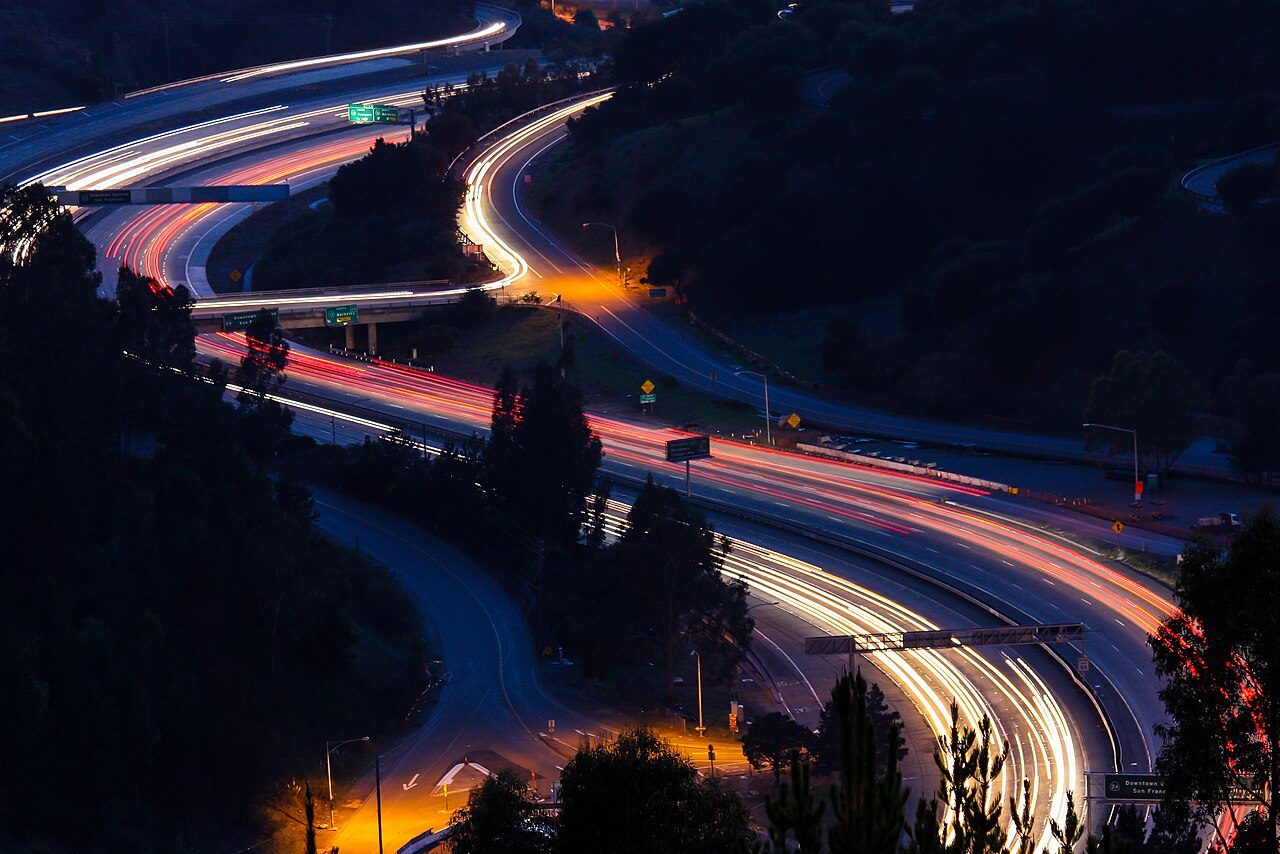
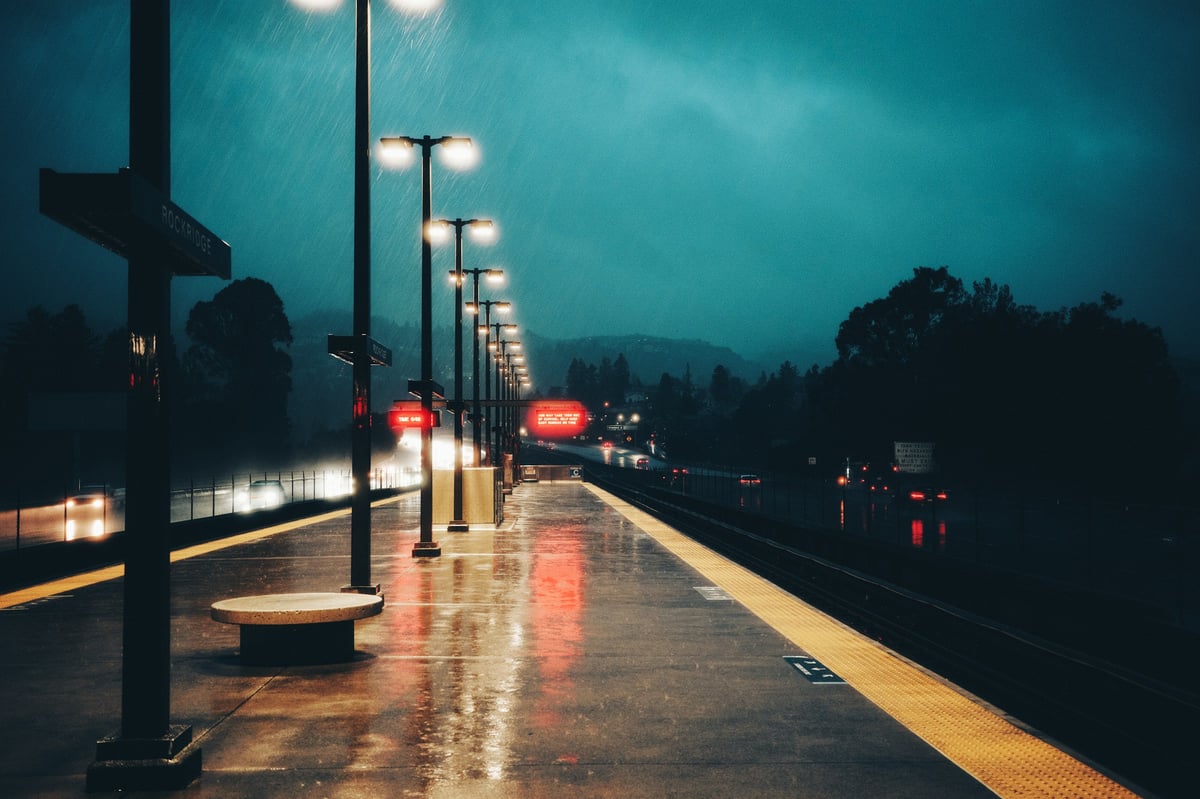
Transit is the clearest functional difference. Rockridge BART at 5660 College Avenue opened May 21, 1973, sits in the median of State Route 24 on a single island platform, and offers $6 per day parking plus 60 BikeLink lockers. Elmwood has no station. Downtown Berkeley BART at 2160 Shattuck serves the Richmond to Berryessa and Richmond to Millbrae lines, both direct to Embarcadero with no transfer, and has no station parking.
On schools, Elmwood feeds Berkeley Unified: 9,162 students across 20 schools, 87% regular attendance against 81% statewide, and a GreatSchools note that a larger number of its schools are rated above average. Rockridge is in Oakland Unified, where I do not have district figures I trust enough to print alongside Berkeley's. Research that one school by school.
How I would choose
- Choose Elmwood if Berkeley Unified is central to your decision and you can absorb a higher entry price and a steeper transfer tax at sale.
- Choose Rockridge if BART at your doorstep matters, the lower Oakland transfer tax between $2 million and $5 million appeals, and the 1920s to 1950s stock suits you.
- Look further up the hill for more house per dollar. Montclair Village and the Crocker Highlands, Trestle Glen and Glenview corridor trade differently on lot size and commute.
Whichever side of College Avenue you land on, buyers should start with a conversation and sellers should request a real valuation rather than rely on an index estimate.
Frequently asked questions
Is Rockridge in Berkeley or Oakland?
Rockridge is in Oakland. It is bounded by Telegraph Avenue on the west, the Oakland Hills on the east, the Berkeley city line on the north, and Pleasant Valley, 51st Street and Broadway on the south. Elmwood sits just across that northern boundary in Berkeley. Because College Avenue runs continuously through both, people frequently assume they are one neighborhood, but they are in different cities with different taxes and school districts.
Is Elmwood or Rockridge more expensive?
Elmwood generally prices higher. Zillow's home value index put Elmwood at $2,217,930 as of June 30, 2026, up 8.3% year over year, and that index measures all homes rather than only sales. Rockridge's most recent Redfin median came in near $2.0 million, but on only ten sales, which is far too thin to treat as a reliable market level. Both sit well above their own city medians.
How much is the transfer tax in Rockridge versus Elmwood?
Both pay Alameda County's $1.10 per $1,000, plus a city tax. Oakland charges $15.00 per $1,000 from $300,000 to $2 million, $17.50 from $2 million to $5 million, and $25.00 above $5 million. Berkeley currently charges $15.00 up to $1.7 million and $25.00 above it. Berkeley's Measure W changes that structure on January 1, 2027. Confirm current figures with a title officer.
Does Elmwood have a BART station?
No. Rockridge has its own station at 5660 College Avenue, which opened May 21, 1973 and sits in the median of State Route 24 with $6 per day parking and 60 BikeLink lockers. Elmwood residents typically use Downtown Berkeley BART at 2160 Shattuck, which serves two lines running direct to Embarcadero with no transfer but offers no station parking.
What kind of homes are in Rockridge?
Rockridge housing was largely built between the 1920s and the 1950s, with some stock dating to 1909 through 1912. The mix is bungalows, cottages and multi-family buildings on a compact grid near College Avenue, which carries more than 80 restaurants, cafes and shops. Buyers should know the 1991 Oakland firestorm came within half a mile of College Avenue, which makes fire and insurance diligence worth doing here.
Sources
- Redfin city market data, three months ending June 2026 — redfin.com
- Zillow Home Value Index, Elmwood, June 30, 2026 — zillow.com
- Alameda County Clerk-Recorder, plus Oakland and Berkeley city transfer tax rates
- City of Berkeley, Measure W property transfer tax — berkeleyca.gov
- Berkeley Unified enrollment and attendance; GreatSchools district summary
Mark Lederer leads The Lederer Team at Red Oak Realty and has closed more than 1,000 East Bay transactions over 25 years, many within a mile of College Avenue. To see these trade-offs laid out for your budget, call 510-774-4231 or email [email protected].