Short answer: Most East Bay hills buyers in 2026 end up with two policies, not one — a California FAIR Plan dwelling policy covering fire, lightning, internal explosion and smoke up to a $3 million residential limit, plus a Difference in Conditions policy adding theft, liability and water damage. Start that search the day you go into contract.
I am a licensed real estate professional, not an insurance broker. This is mechanics; confirm specifics with a licensed insurance broker.
The two-policy structure nobody explains
The California FAIR Plan is an insurer of last resort, established by statute to provide basic property insurance when no other option is reasonably available. Created in 1968, it is an association of all admitted property and casualty insurers licensed in California under Insurance Code section 10090 — not a state agency. As of December 2025 it held 668,609 policies and $724 billion of exposure, nearly 6% of the California property market.
Its coverage is narrow by design: a named-peril dwelling policy for fire and lightning, internal explosion, and smoke, with optional coverages at extra cost. It is not comprehensive homeowners insurance. Commonly missing are theft, personal liability and water damage, and in December 2025 a California Court of Appeal held it is not required to offer expanded liability coverage. The residential dwelling limit is $3 million, set in 2019 — you may see $3.3 million from an Assembly committee background paper, but CDI and the FAIR Plan's own presentation both say $3 million.
The fix is a Difference in Conditions policy — a DIC, or wrap. The FAIR Plan's own site says your broker can help you find one offering additional coverages to provide the equivalent of comprehensive homeowners insurance. Together they approximate a standard HO-3.
Coverage | FAIR Plan | Standard HO-3 | FAIR Plan + DIC |
|---|---|---|---|
Fire, lightning, explosion, smoke | Covered | Covered | Covered |
Theft | Commonly not covered | Covered | Added by DIC |
Personal liability | Commonly not covered | Covered | Added by DIC |
Water damage | Commonly not covered | Covered | Added by DIC |
Dwelling limit | $3 million | Set by carrier | Fire limit $3 million |
Renewal dates to track | One | One | Two |
What it costs, and what changes October 15, 2026
The FAIR Plan has an average rate increase of 29.1% approved and effective October 15, 2026, against a 35.8% increase requested in a September 2025 filing, per KQED, published August 11, 2026. Increases vary sharply by risk, and some lower-risk Bay Area policyholders may see decreases. Ask which side of that date your policy binds on.
A second cost reaches people not on the FAIR Plan at all. On February 11, 2025 it assessed member insurers $1 billion after the Eaton and Palisades fires, having paid nearly $3.5 billion on roughly 5,400 claims. Members absorb half and may recoup the other half from non-FAIR-Plan policyholders as a temporary supplemental fee subject to the Commissioner's approval.
The discounts you are owed, and the ones you earn
Safer from Wildfires, codified at 10 CCR section 2644.9 effective October 14, 2022, is a mandate. Insurers that rate by wildfire risk must recognize twelve mitigation measures, disclose the property's risk score and how to lower it — at application, at renewal, and on request after mitigation work — and provide an appeals process. The FAIR Plan must offer them too:
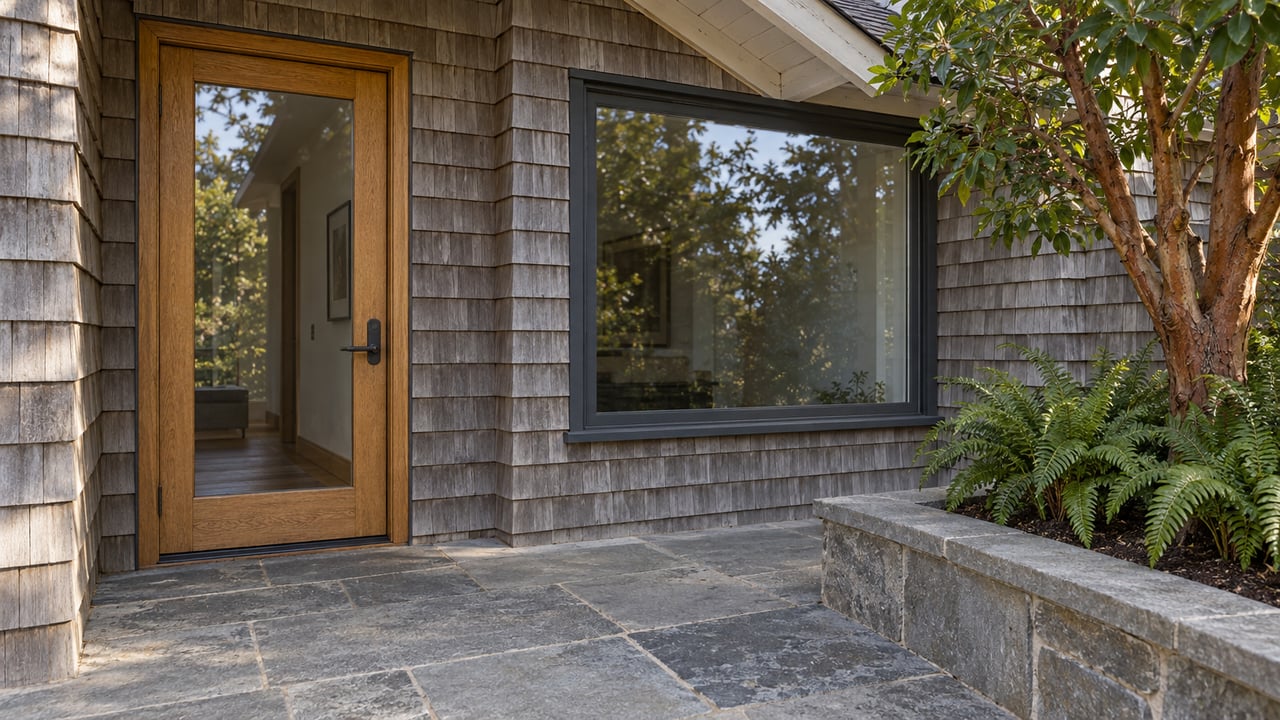
- Structure: Class A fire-rated roof; ember-resistant vents; noncombustible material for the bottom six inches of exterior walls; double-pane windows or shutters; enclosed eaves.
- Immediate surroundings: combustibles cleared within five feet of the house; debris cleared under decks; sheds at least 30 feet away; trees and brush cleared per defensible space law.
- Community: Firewise USA recognition; certification as a Fire Risk Reduction Community.
No percentage range appears here: the regulation requires discounts and score disclosure, not verifiable percentage floors. What it gives you is a right — ask for your score, and appeal it if it looks wrong.
Separately there is the IBHS Wildfire Prepared Home designation, from the Insurance Institute for Business and Home Safety, an insurer-funded nonprofit. Voluntary and third-party verified, in two tiers: Base targets wind-blown embers; Plus adds flame and radiant-heat protection plus defensible space within 30 feet. It is not part of the mandate, so recognition is carrier by carrier. Mercury Insurance's own California page lists 22.5% to 37.5% for Wildfire Prepared Home and 30% to 50% for Plus, stating these apply only to the wildfire-peril portion of the policy and are subject to underwriting approval.
Zone 0: what is actually true right now
On August 19, 2026 the California Board of Forestry and Fire Protection voted 8 to 0 to approve the final draft of its Zone 0 regulations, which now go to the Office of Administrative Law for review. The rule is not in effect. There is no OAL file number, no Secretary of State filing and no effective date, and CAL FIRE's own readyforwildfire.org still says that while not legally required yet, Zone 0 is key for wildfire defense. OAL takes five days of public comment — the package is on the emergency rulemaking track authorized by AB 1455 (2025) — before deciding.
Once the rule takes effect, new construction complies immediately. Existing structures get roughly three years for Phase 1 — combustible materials, bark mulch, wood chips, firewood, dead vegetation, roof and gutter debris — and roughly five years for Phase 2: noncombustible zone under eaves, combustible fences and gates, sheds and outbuildings, decking. Both clocks run from the effective date, which does not exist yet.
AB 1455 sets two earlier deadlines most coverage omits, and they matter to anyone transacting: rental properties immediately, and properties for sale on sale or three years, whichever is sooner. Coverage is State Responsibility Areas plus Very High Fire Hazard Severity Zones in Local Responsibility Areas: the Berkeley Hills, Oakland Hills, Kensington, Lamorinda. The work list is in our Zone 0 post.
The protection people forget, and how we sequence this
Insurance Code section 675.1, from SB 824 in 2018, provides that a gubernatorial wildfire emergency declaration bars cancellation or non-renewal of residential policies for one year in ZIP codes within or adjacent to the fire perimeter — including for policyholders with no loss at all. CDI's most recent listed declaration is August 6, 2026, the Gann Fire.
Our team is nine people: three advisors and six dedicated specialists in finance, mortgage, insurance, estate planning and renovation. Our insurance expert runs a complimentary assessment across auto, property, multi-unit and life; we often increase clients' coverage while decreasing their cost. In 2025, the team's sales stats placed it in the top 1.5% of agents nationwide.
Sequencing that works: quote before you write the offer, bind before you release contingencies, read both policies side by side before closing. The checklist version is the contingency-period insurance review. For our insurance planning expert to look at an address, get in touch.
Frequently asked questions
Can I get regular homeowners insurance in the Berkeley or Oakland hills in 2026?
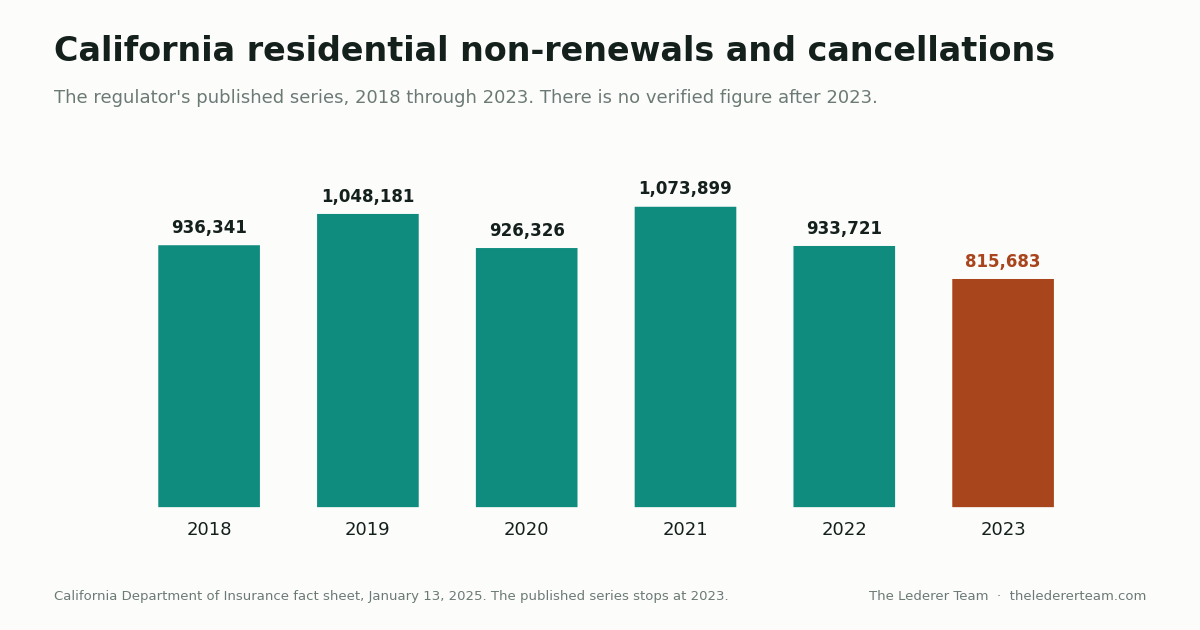
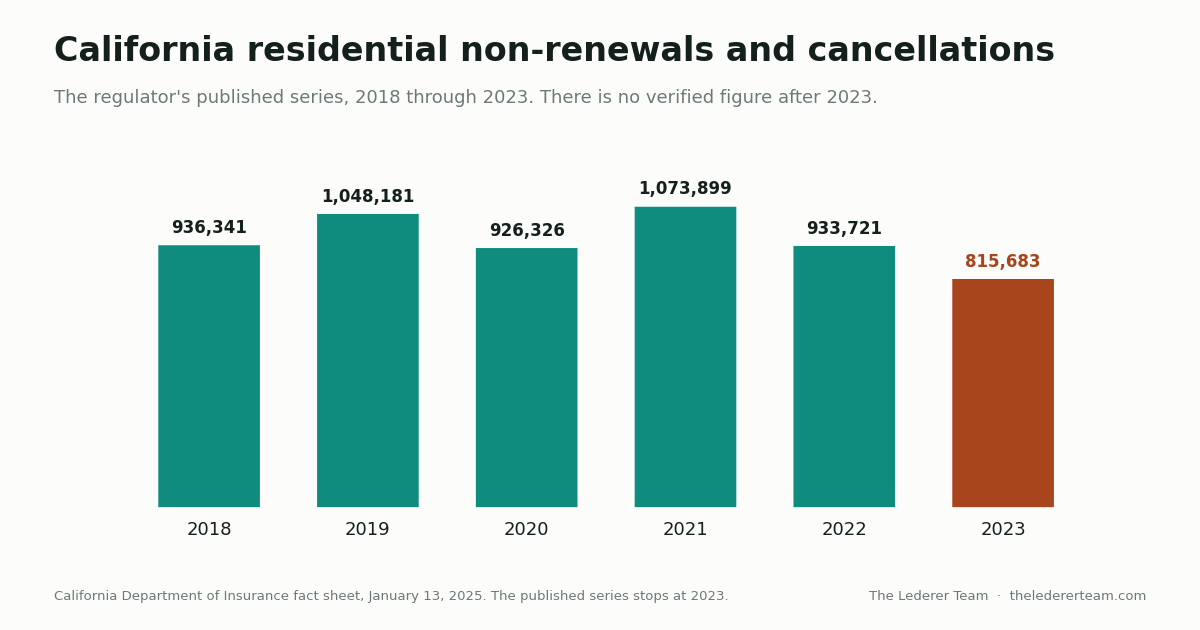
Sometimes. CDI's 2026 announcements — the regulator's own characterization, not independent findings — describe Farmers, Travelers and Liberty Mutual expanding in California, and FAIR Plan growth slowed to roughly 16,000 new residential policies in the first quarter of 2026. CDI's published non-renewal series stops at 2023, so there is no verified count for how availability has changed since. Appetite is property-specific, so get a quote on the address and confirm with a licensed insurance broker.
What does the California FAIR Plan not cover?
It is not comprehensive homeowners insurance. It is a named-peril dwelling policy for fire and lightning, internal explosion and smoke. Commonly missing are theft, personal liability and water damage, and in December 2025 a California Court of Appeal held it is not required to offer expanded liability coverage.
How much will the FAIR Plan insure my house for?
The residential dwelling limit is $3 million, established in 2019. You may see $3.3 million cited from an Assembly committee background paper, but CDI and the FAIR Plan's own presentation both say $3 million. Above that, you need excess or surplus-lines coverage through a broker.
Is the Zone 0 five-foot ember-resistant zone required now?
No. On August 19, 2026 the Board of Forestry and Fire Protection approved the final draft of its Zone 0 regulations, which now go to the Office of Administrative Law for review. There is no effective date, and CAL FIRE's own site still says it is not legally required yet. Once the rule takes effect, AB 1455 sets earlier deadlines: rentals immediately, and properties for sale on sale or three years, whichever is sooner.
Will wildfire mitigation actually lower my premium?
It has to be recognized, though no verifiable percentage floor exists. Safer from Wildfires obliges insurers that rate by wildfire risk to credit twelve measures, disclose your risk score, and provide an appeals process. Mercury's own California page separately lists 22.5% to 37.5% for an IBHS Wildfire Prepared Home and 30% to 50% for Plus, wildfire-peril portion only.
Sources
- California FAIR Plan Association, 2026 — link
- CDI, FAIR Plan limits, March 28, 2025 — link
- CDI, FAIR Plan assessment, February 11, 2025 — link
- CDI, residential policies fact sheet — link
- KQED, FAIR Plan rate increase, August 11, 2026 — link
- CDI, Safer from Wildfires FAQ — link
- CDI, non-renewal moratorium — link
- Mercury Insurance, wildfire mitigation — link
- Board of Forestry, Zone 0 — link
- CAL FIRE, defensible space — link
Mark Lederer leads The Lederer Team at Red Oak Realty — 25-plus years and 1,000-plus closed East Bay transactions, with an insurance expert among the team's six specialists. Call 510-774-4231 or email [email protected]. Confirm coverage with a licensed insurance broker.