Caymus-Suisun
The Wagner familySuisun Valley
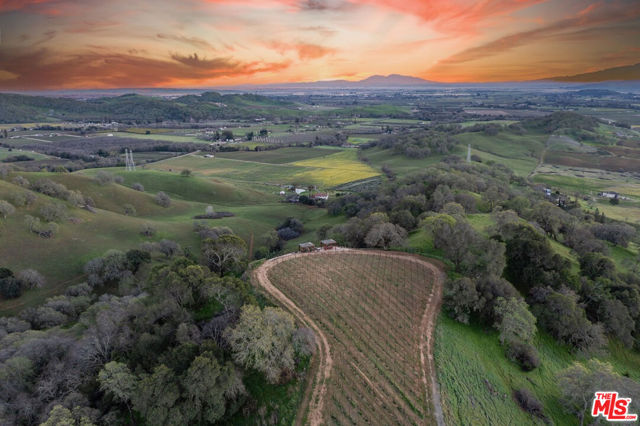
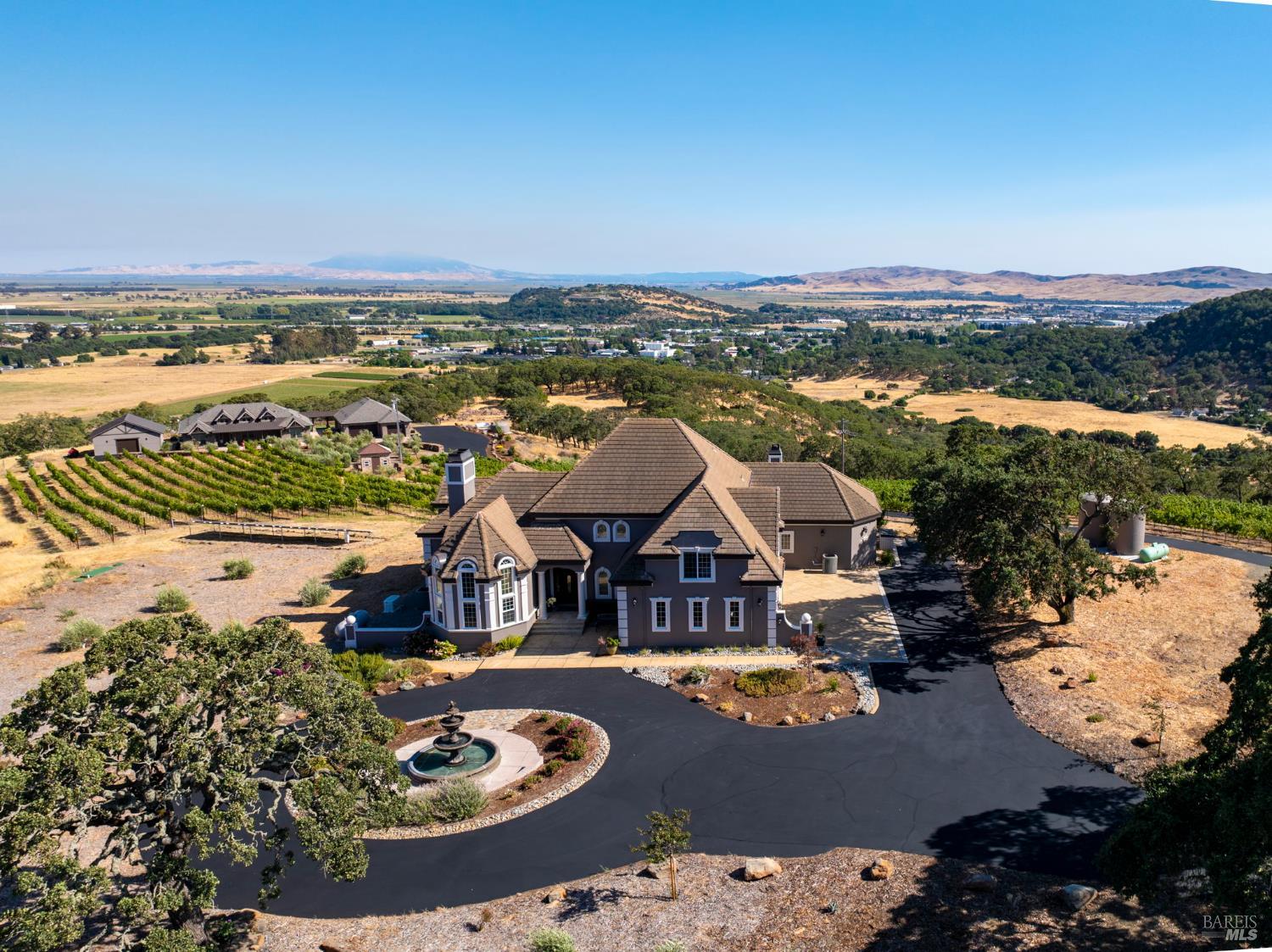
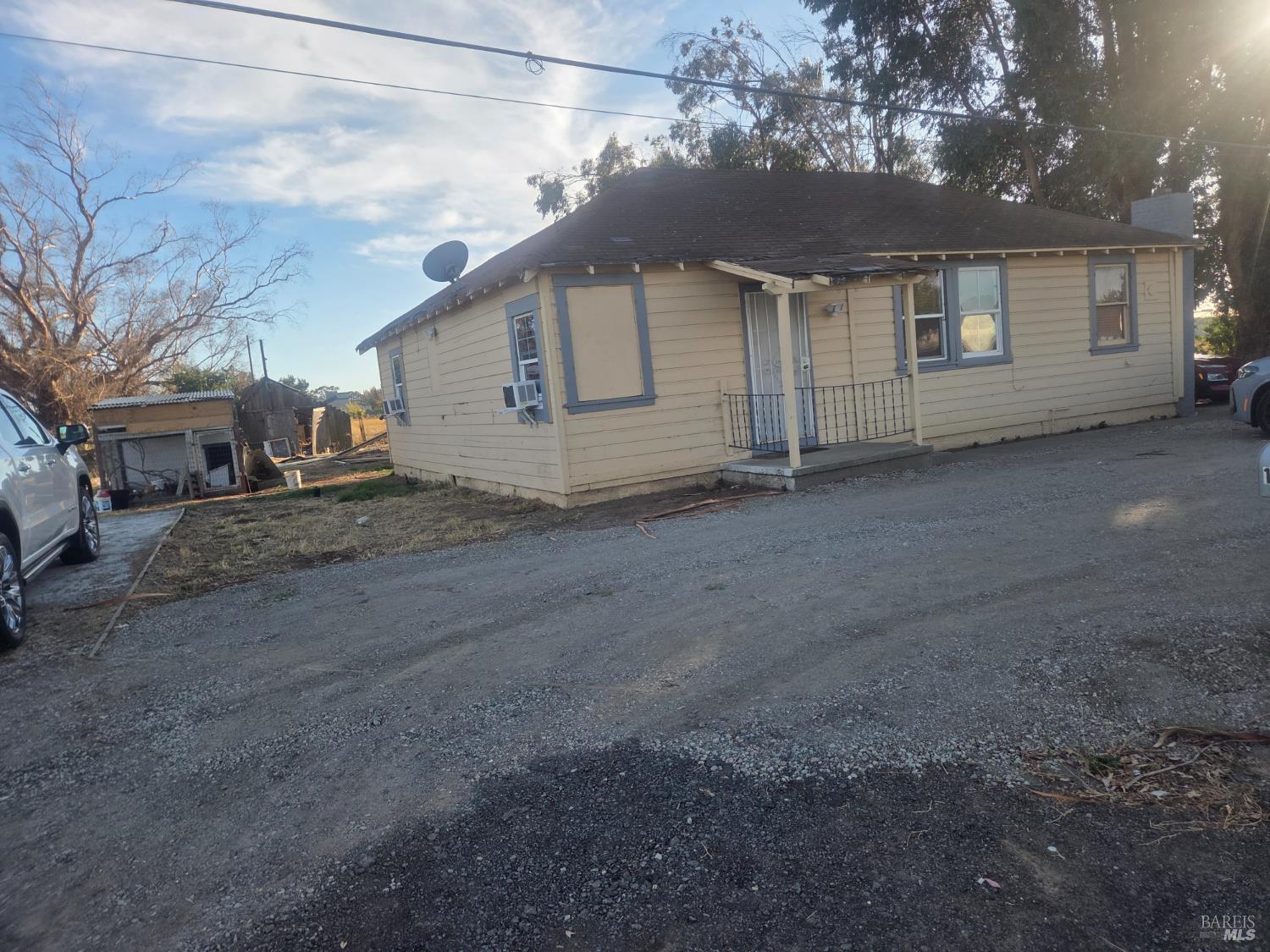
The Caymus family's Suisun Valley estate, pouring daily by reservation — the clearest signal yet that this appellation is being taken seriously.
The most affordable county in the Bay Area — seven cities between the Carquinez Strait and the Delta, with a wine appellation on one side and a hundred thousand acres of marsh on the other.
7
Cities & Towns
455K
Residents
116,000 acres
Suisun Marsh
$476M
Farm Production
This is the affordability argument, and it holds up. Solano has the lowest typical home value of any of the nine Bay Area counties — regional data put it around half the Bay Area average in 2025. It is also the only part of the region that did not shrink: the county has held roughly steady since 2020 while the nine-county Bay Area lost more than a hundred thousand people. Agricultural production set a record in 2025 at $476 million, led by almonds. The marsh figure is the Suisun Marsh, the largest contiguous brackish marsh in California and likely on the West Coast. Population is the Census Bureau's July 2025 estimate.
Solano County occupies the gap between the Bay Area and the Sacramento Valley, and it is genuinely four places at once. The strait cities — Vallejo and Benicia — sit on deep water at the north end of San Francisco Bay, and hold the oldest housing and most of the history. The I-80 corridor — Fairfield, Vacaville, Dixon — is the freeway economy: subdivisions, Travis Air Force Base, the outlets, and most of the county's population.
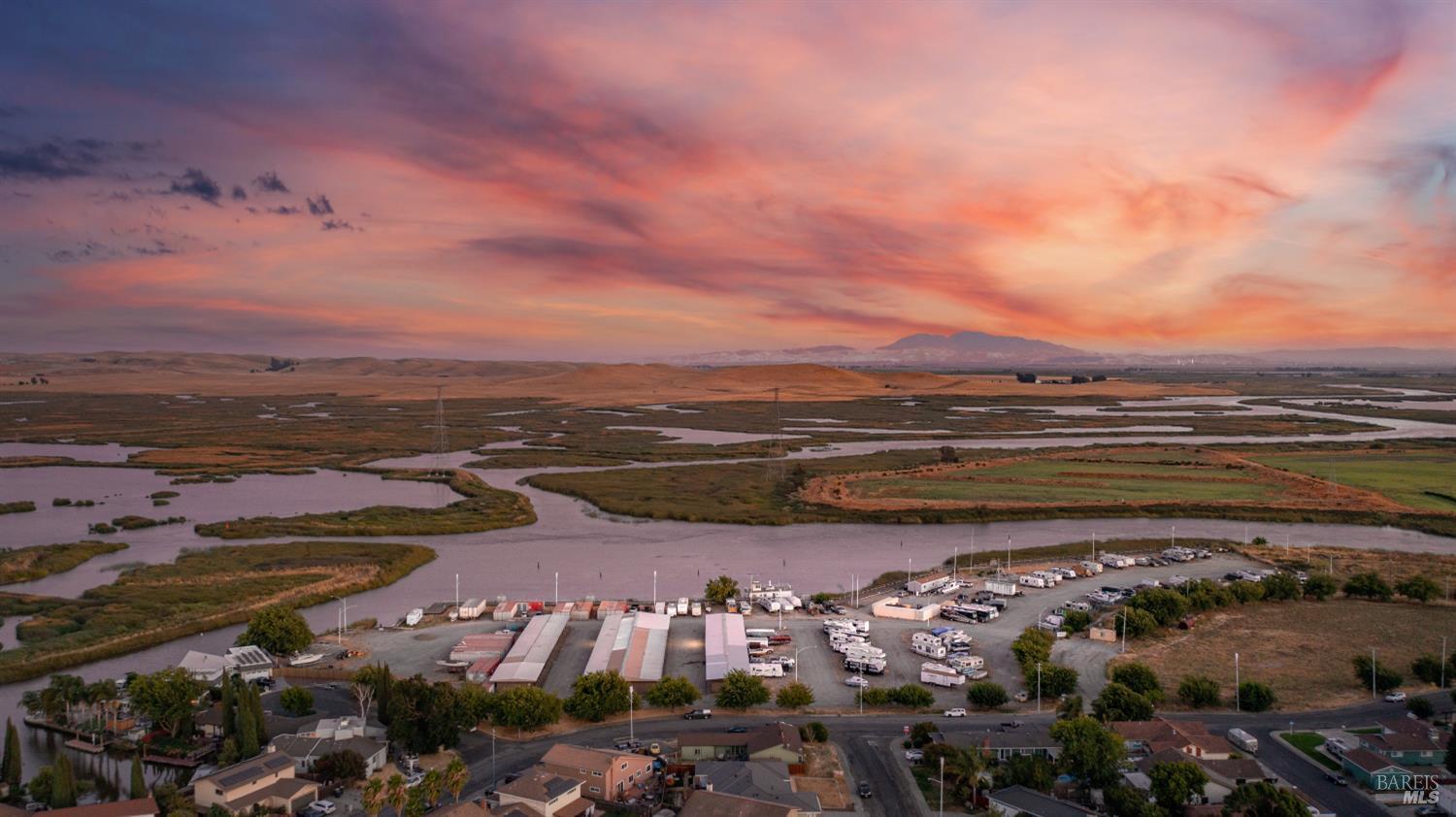
South and east of those is water. Suisun City sits at the head of a slough on the edge of a hundred and sixteen thousand acres of marsh. Rio Vista is a Delta river town with wind turbines on the hills behind it.
And then there is the west side, which almost nobody outside the county knows about. Green Valley and Suisun Valley run north from Cordelia into the hills, and they sit inside the same North Coast appellation as Napa — directly over the ridge from it.
All seven, plus the valleys
≈ 123,300
The oldest and most architecturally varied stock in the county, with three National Register districts — Victorian and Italianate in the Architectural Heritage District, Craftsman and Art Deco on St. Vincent's Hill, and the Mare Island historic core. Sits at the bottom of the county price hierarchy and is the entry point for buyers priced out of Napa and the inner bay. The best-diversified commute here: I-80, I-780, and the county's only ferry. Work inside a historic district requires a certificate of appropriateness, and the school district is a real consideration for family buyers.
≈ 122,500
The county seat, and now effectively its largest city after two decades of steady growth. Predominantly post-war and late-century subdivision, with the higher-end pockets at Rancho Solano and on the Green Valley and Cordelia side of town. Mid-pack overall, with the west side trading well above the city's general range. Pure I-80 commuting, plus Highway 12 west to Napa. Two Capitol Corridor stations serve the city. Travis Air Force Base sits on the east side, and its land-use compatibility plan constrains housing under the flight paths.
≈ 103,900
The county's tract-subdivision city, and still actively building — North Village is the current master-planned area. Mid-to-upper-mid on price, generally above Fairfield and below Benicia, with the strongest of the three big I-80 school districts. Roughly midway between Sacramento and the bay on I-80. The Premium Outlets draw regionally, and the two state correctional facilities here employ well over two thousand people between them, which is a meaningful and often-overlooked part of the local economy.
≈ 29,500
The most affordable entry in the county alongside Vallejo, built around a marina and a revitalized downtown at the head of Suisun Slough. Best position in the county for Sacramento-bound commuters — the Suisun-Fairfield station has been in service since 1914 and has free park-and-ride. Flooding is the real disclosure item: the east side and southern neighborhoods carry genuine sea-level-rise exposure, and parcel-level flood zone should be confirmed before any offer.
≈ 26,400
The county's premium market and its most distinctive: a walkable historic waterfront town on the Carquinez Strait, founded in 1849, the third city incorporated in California, and the State Capital for thirteen months beginning in 1853. Historic First Street stock plus later hillside subdivisions. Top of the county hierarchy, and the highest-rated school district in Solano — which is a primary demand driver here, not a footnote. I-780 to I-80 and I-680, and the closest Solano city to the 680 job corridor.
≈ 21,100
The fastest-growing city in the county by a wide margin, up nearly nine percent since 2020, and still fundamentally an agricultural town of about seven square miles. Newer tract stock predominates given that growth. Lower-mid on price. Position is the story: Dixon sits at the Sacramento Valley end of the county, which makes it a Davis and Sacramento commute town far more than a Bay Area one. Home to the Dixon May Fair, now in its 149th year.
≈ 10,500
A Delta river town, second-fastest growing in the county, and demographically unlike anywhere else in Solano because of Trilogy — a gated, age-restricted community of roughly three thousand homes built between 1996 and 2020, with two clubhouses and an eighteen-hole course. Low-to-mid on price with an unusually high share of newer single-story product. The weakest commute position in the county: no freeway, with Highway 12 the lifeline. Delta levee and flood exposure is real and needs parcel-level verification.
Unincorporated
The county's high end and its genuine differentiator. Suisun Valley became the nation's twenty-first American Viticultural Area in 1982 — roughly fifteen thousand acres with about three thousand planted — and Solano County Green Valley is a second, cooler appellation beside it. Both sit inside the same North Coast appellation as Napa. The Wagner family of Caymus built a winery on Suisun Valley Road, Gallo bought vineyards here, and a dozen tasting rooms now operate. Hillside estates, golf, and vineyard adjacency, twenty minutes from Napa.
Split jurisdiction
Worth understanding before you write an offer. Most of what buyers call Cordelia today — Cordelia Junction, Gold Ridge, and the Green Valley-adjacent subdivisions — has been annexed into Fairfield, while the historic village core remains unincorporated county. High demand either way for the 94534 ZIP and the I-80/I-680 junction position, but the jurisdiction determines who issues permits, who provides services, and what the tax picture looks like. Verify it parcel by parcel.
County-governed
Elmira and Allendale are farm crossroads near Vacaville and Dixon. Birds Landing sits in the Montezuma Hills among one of California's oldest and largest wind resource areas, now being repowered. Collinsville is a near-ghost town on Montezuma Slough. Out here you are dealing with county planning rather than a city: wells and septic, private road agreements, Williamson Act contracts on agricultural land, and long emergency response times.
Population figures are U.S. Census Bureau estimates for July 2025. Fairfield and Vallejo are now within a few hundred residents of each other and have effectively traded places depending on which estimate series you read.
The single best commute asset in the county is the Vallejo ferry: about sixty minutes to the Downtown San Francisco Ferry Terminal, with thirteen southbound and fourteen northbound departures on a weekday. Nothing else in Solano gets you to the city that reliably.
Two Capitol Corridor stations serve the middle of the county — Suisun-Fairfield and Fairfield-Vacaville Hannigan — on a line running San Jose to Sacramento with roughly fifteen weekday round trips. Both have free parking, which is not a small thing.
Otherwise it is freeways. Interstate 80 is the spine and the chronic congestion story. I-680 across the Benicia-Martinez Bridge is the Contra Costa and Tri-Valley connection. Highway 12 runs the county east to west and is the only real access to Rio Vista. And Highway 37, the link to Marin and Sonoma, floods on seasonal rain and high tides — a resilience program is underway in stages, but it is a live problem worth understanding before you commit to that commute.
Nine across the county
Suisun Valley
The Caymus family's Suisun Valley estate, pouring daily by reservation — the clearest signal yet that this appellation is being taken seriously.
Suisun Valley
Founded at the end of Prohibition and run by the same family since 1944. Open daily, year round.
Suisun Valley
The Blue Victorian and Mankas Gardens anchor the valley's tasting circuit between them.
Mankas Corner
A working olive mill with a farm-to-table bistro and scheduled oil and balsamic tastings.
Benicia
A gastropub on Benicia's historic main street since 2009, with twenty drafts and a garden courtyard.
Benicia
Waterfront seafood in a sea captain's home on the Carquinez Strait, with the water right there.
Mare Island
A waterfront brewpub in a restored shipyard coal shed, and the best reason to walk Mare Island.
Vacaville
A downtown Vacaville fixture for forty years, with weekend brunch and a full bar.
Rio Vista
A river-town bar and restaurant hung with a private big-game collection of more than two hundred and fifty mounts, assembled in the 1930s.
No Solano County restaurant currently holds a Michelin star or a Bib Gourmand. The county's food reputation rests on the Suisun Valley tasting rooms and on institutions that have been in the same families for generations — which is a different and, for a lot of buyers, more interesting proposition.
Solano runs on a different weather calendar than the rest of the Bay Area. It is hotter and drier than anywhere west of it, with genuine triple-digit afternoons inland through July and August — cut, on most evenings, by the Delta breeze pulling in through the marsh.
Winter brings the opposite extreme: the tule fog settles into the Dixon and Vacaville flatlands and can sit for days. The hills go green in December and stay green until about April, when the vernal pools at Jepson Prairie fill and bloom, and then turn gold for the rest of the year.
Here is what a year actually looks like, marsh to freeway.
Month by month, strait to Delta
January
Tule fog, hills turning green
February
Peak green, waterfowl everywhere
March
Vernal pools fill and bloom
April
Greenest hills of the year
May
Hills turn gold, heat arrives
June
First triple-digit days inland
July
Hottest month, strong Delta breeze
August
Hot days, cool Delta nights
September
Harvest heat, warmest evenings
October
Crush season, first rains
November
Tule fog returns, hills greening
December
Dense tule fog, green hills
Drag the slider below to move through the year
The reason Solano's cities are compact, and the reason you can still see farmland from the freeway, is a ballot measure. The Orderly Growth Initiative passed in 1984 and was renewed by voters in 1996 and again in 2007. It requires a vote of the people — not merely a board decision — to convert agricultural land to urban use. Very few California counties have anything that strong, and it has held for four decades.
Around it sit the Suisun Marsh, protected by its own state preservation act; more than twenty-five thousand acres held permanently by the Solano Land Trust at Rush Ranch, Lynch Canyon, and the King-Swett Ranches; and Jepson Prairie, a National Natural Landmark of remnant native grassland and vernal pools.
One thing to watch: a private venture has been assembling land in eastern Solano and has active proposals for a manufacturing park, a shipyard, and a large annexation to Suisun City. All of it is contested and none of it is approved. If you are buying in the east county, ask us where the current proposals stand before you commit.
A dozen public tasting rooms across the appellation, twenty minutes from Napa and without any of the traffic.
California's only surviving pre-Sacramento capitol building, in the middle of Benicia's historic downtown.
Two thousand acres on the edge of the Suisun Marsh, with three miles of trail, free and open daily.
Fifteen hundred acres of remnant native prairie and vernal pools near Dixon, and a National Natural Landmark.
Restored electric interurban cars you can ride, out on Highway 12 between Suisun City and Rio Vista.
The county's largest single attraction, on the north side of Vallejo just off Interstate 80.
Private
Solano is refreshingly simple on schools, with one exception. All six county districts — Benicia, Dixon, Fairfield-Suisun, Travis, Vacaville, and Vallejo City — are unified K through 12, so an address determines one district all the way through, with no separate elementary and high school boundaries to reconcile. That is genuinely unusual in the Bay Area. Two things to know: Travis Unified is a separate district from Fairfield-Suisun despite sitting right beside it, which matters in the Travis corridor and eastern Fairfield. And Rio Vista is the exception — it is served by River Delta Unified, a three-county district headquartered in town but extending into Sacramento and Yolo counties.
450,824 people live in Solano , where the median age is 39.1 and the average individual income is $44,139. Data provided by the U.S. Census Bureau.
Total Population
Median Age
Population Density Population Density This is the number of people per square mile in a neighborhood.
Average individual Income
Solano has 155,800 households, with an average household size of 2.83. Data provided by the U.S. Census Bureau. Here’s what the people living in Solano do for work — and how long it takes them to get there. Data provided by the U.S. Census Bureau. 450,824 people call Solano home. The population density is 549 and the largest age group is Data provided by the U.S. Census Bureau.
Total Population
Population Density Population Density This is the number of people per square mile in a neighborhood.
Median Age
Men vs Women
Population by Age Group
0-9 Years
10-17 Years
18-24 Years
25-64 Years
65-74 Years
75+ Years
Education Level
Total Households
Average Household Size
Average individual Income
Households with Children
With Children:
Without Children:
Marital Status
Blue vs White Collar Workers
Blue Collar:
White Collar: