San Anselmo
Ron Siegel's seasonal Californian tasting menu — the only Michelin-starred restaurant in the county, in a town of twelve thousand.
Eleven cities and towns on the far side of the Golden Gate — wrapped in more protected parkland, seashore, and watershed than any county in the Bay Area.
11
Cities & Towns
254K
Residents
2,571 ft
Mount Tamalpais
3
Ferry Terminals
Why Marin stays small. Marin County Parks alone manages 18,500 acres across 39 parks and 34 open space preserves — and that is only the county's own land, before Point Reyes National Seashore adds another 71,000 acres, or Muir Woods, Mount Tamalpais State Park, the Marin Headlands, and the water district watershed are counted at all. The result is a county of small towns that cannot grow outward, which is the single most important fact about its housing market.
Marin begins at the north end of the Golden Gate Bridge and runs up the west side of the bay to the Sonoma line. The 101 corridor holds nearly all of the housing — Sausalito and Mill Valley at the south end, then Corte Madera, Larkspur, San Rafael, and Novato heading north, with the Ross Valley towns tucked west into the hills.
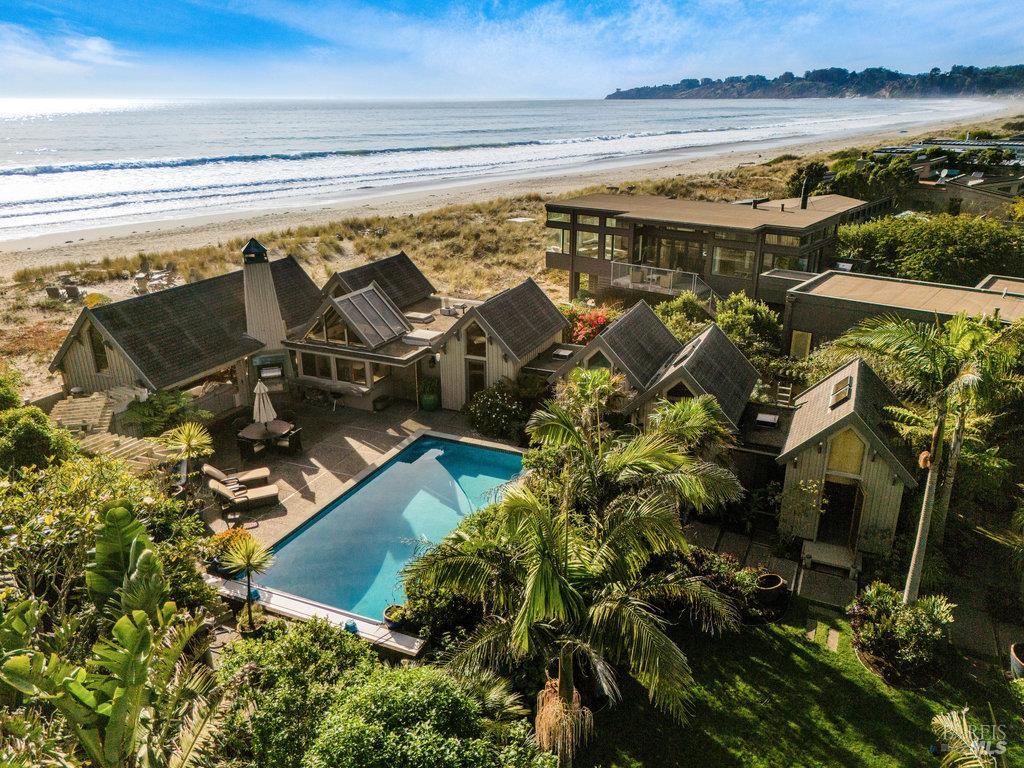
Over the ridge, everything changes. West Marin is ranchland, coastal village, and national seashore: Stinson Beach, Bolinas, Point Reyes Station, and eighty-some miles of protected shoreline. It is twenty minutes and a different century from Mill Valley.
Marin has no BART. It was an original member of the district and withdrew in 1962, and the county has been shaped by that decision ever since — ferries, the SMART train, and the bridge do the work instead.
All eleven
≈ 59,400
The county seat and only real city. Everything from Dominican and Peacock Gap single-families to Terra Linda ranches and Canal-area apartments. SMART, the transit center, and the 101/580 junction make it the county's hub — and its broadest price range.
≈ 51,900
By far the largest municipality by area and the most subdivision housing — fifties through 2000s tracts plus newer construction at Hamilton Field. Three SMART stations, the longest drive to the bridge, and the county's main source of sub-median inventory.
≈ 13,800
Redwood-canyon craftsman and mid-century homes above, flatland tracts in Sycamore and Alto below. Twenty to twenty-five minutes to the city off-peak. Consistently a top-three market with the deepest high-end inventory in the county.
≈ 12,600
Two towns in one: historic downtown cottages and Baltimore Canyon homes, versus Greenbrae condos and the Larkspur Landing corridor. The only place in Marin with both a ferry terminal and a SMART station, which is why the condos hold value.
≈ 12,600
A genuinely walkable downtown on San Anselmo Avenue, with 1920s and 1930s bungalows and Tudors below and hillside homes above. Mid-to-upper tier, and meaningfully cheaper than Southern Marin.
≈ 9,900
Mid-century ranches and newer townhomes on flat, walkable ground beside the county's main retail. Easy 101 access and one of the more attainable ways into the southern half of the county.
≈ 8,900
View homes along the peninsula ridge, lagoon flats below, and condos at Point Tiburon. A ferry to the city and one road in and out — which constrains traffic and supply alike. Top tier, just below Belvedere and Ross.
≈ 7,400
Woodsy cottages, hillside cabins, and eclectic older stock at the west end of the Ross Valley. The longest commute of the valley towns and, not coincidentally, its most affordable entry point.
≈ 7,000
Hillside view homes, condos, and the floating-home community at Waldo Point. The closest drive to San Francisco and a ferry besides. High price per square foot, but small units mean entry prices can undercut Mill Valley.
≈ 2,300
Estate parcels on the flat valley floor, large lots, mature landscaping, and almost nothing that turns over. Competes with Belvedere for the highest median in the county.
≈ 2,100
A waterfront and hillside enclave on its own small peninsula, reached through Tiburon. Custom homes, no entry-level stock whatsoever, and the most expensive market in the county by a wide margin.
County-governed
Kentfield and Greenbrae price with the towns beside them. Strawberry sits between Mill Valley and Tiburon with strong commute access. West of the ridge, Stinson Beach, Bolinas, Point Reyes Station, and Nicasio are a separate market entirely — small, old, water-constrained, and forty-five minutes from the freeway.
Population figures are U.S. Census Bureau estimates for July 2025, except Belvedere and Ross, which fall below the publication threshold and use the 2020 Census. Marin's population has declined countywide since 2020.
Marin withdrew from the BART district in 1962 and has been living with that decision ever since. What it built instead is unusual: three Golden Gate Ferry terminals to San Francisco — Sausalito, Tiburon, and Larkspur — and six SMART rail stations running north from Larkspur through San Rafael to Novato.
Two bridges carry the rest. The Golden Gate puts Mill Valley twenty-odd minutes from the city off-peak, and the Richmond–San Rafael Bridge connects the county east to the rest of the East Bay.
Nine across the county
San Anselmo
Ron Siegel's seasonal Californian tasting menu — the only Michelin-starred restaurant in the county, in a town of twelve thousand.
Sausalito
Omakase, sushi, and one of the deepest sake lists in Northern California, a block off Bridgeway.
San Anselmo
Mediterranean cooking that has held its Bib Gourmand for eighteen consecutive years.
Fairfax
A tiny Japanese izakaya with no reservations and a line down the sidewalk. Worth it.
Mill Valley
Contemporary coastal Mexican with a serious agave program, on Miller Avenue.
Mill Valley
Oysters, ribs, and a martini at the bar, in a roadhouse just off the 101. Marin's most reliable institution.
Sausalito
Northern Italian on Bridgeway — handmade pasta, wood-fired pizza, and a view of the ferry landing.
San Rafael
Jibaritos, mofongo, and citrus-marinated chicken. The most beloved cheap meal in the county.
Marshall
Oysters pulled from the water in front of you, in a fish house on pilings out in West Marin.
Marin runs on two seasons and a wildlife schedule. The hills are green from November to May and gold the rest of the year. The fog arrives in May and burns off in September. And offshore, the gray whales, elephant seals, and tule elk each keep their own appointments.
Here is what a year actually looks like, from the ridge to the seashore.
Month by month, ridge to seashore
January
Hills at their greenest
February
Waterfalls on Mount Tam
March
Wildflowers
April
Peak bloom
May
Fog season begins
June
Golden hills
July
Coastal fog, inland sun
August
Dry season
September
Warmest, clearest weeks
October
First rains
November
Hills green again
December
Storm season
Drag the slider below to move through the year
Muir Woods was protected in 1908, before there was a National Park Service to protect it. Point Reyes followed in 1962, the Golden Gate National Recreation Area in 1972, and the county's own open space district in 1972 as well.
Three generations of deliberate decisions are the reason Marin looks the way it does — and the reason there is so little of it for sale.
Five hundred and fifty acres of old-growth coast redwood, federally protected since 1908. Parking or shuttle reservations required in advance.
Seventy-one thousand acres of beach, headland, and working ranchland, with a lighthouse, tule elk, and gray whales in season.
The county's signature peak, with views across the whole bay and the stone amphitheatre near the summit.
Point Bonita Lighthouse, Hawk Hill, Rodeo Beach, and the view of the bridge everyone has seen.
The largest natural island in the bay, reached by ferry from Tiburon, with the immigration station museum.
An 1860s Chinese shrimp-fishing village and fifteen hundred acres of oak woodland and intact tidal marsh, minutes from downtown San Rafael.
Private
Marin runs an unusual number of very small districts. Several towns operate their own elementary districts feeding into shared high schools, and the boundaries do not always follow city lines. Tell us which district you need and we'll identify properties inside it before you tour anything.
258,765 people live in Marin, where the median age is 47.3 and the average individual income is $90,408. Data provided by the U.S. Census Bureau.
Total Population
Median Age
Population Density Population Density This is the number of people per square mile in a neighborhood.
Average individual Income
Marin has 103,201 households, with an average household size of 2.44. Data provided by the U.S. Census Bureau. Here’s what the people living in Marin do for work — and how long it takes them to get there. Data provided by the U.S. Census Bureau. 258,765 people call Marin home. The population density is 497 and the largest age group is Data provided by the U.S. Census Bureau.
Total Population
Population Density Population Density This is the number of people per square mile in a neighborhood.
Median Age
Men vs Women
Population by Age Group
0-9 Years
10-17 Years
18-24 Years
25-64 Years
65-74 Years
75+ Years
Education Level
Total Households
Average Household Size
Average individual Income
Households with Children
With Children:
Without Children:
Marital Status
Blue vs White Collar Workers
Blue Collar:
White Collar: